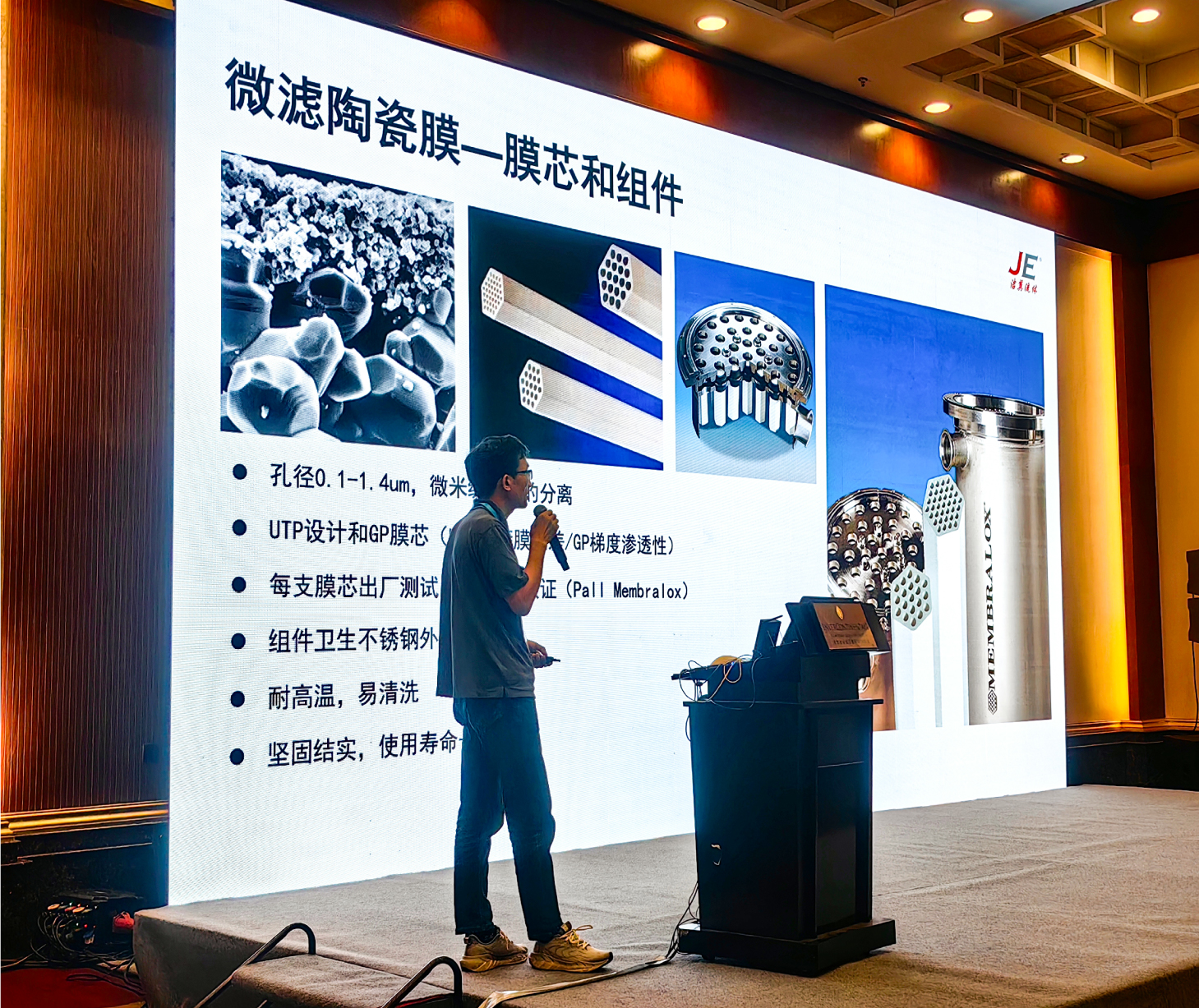
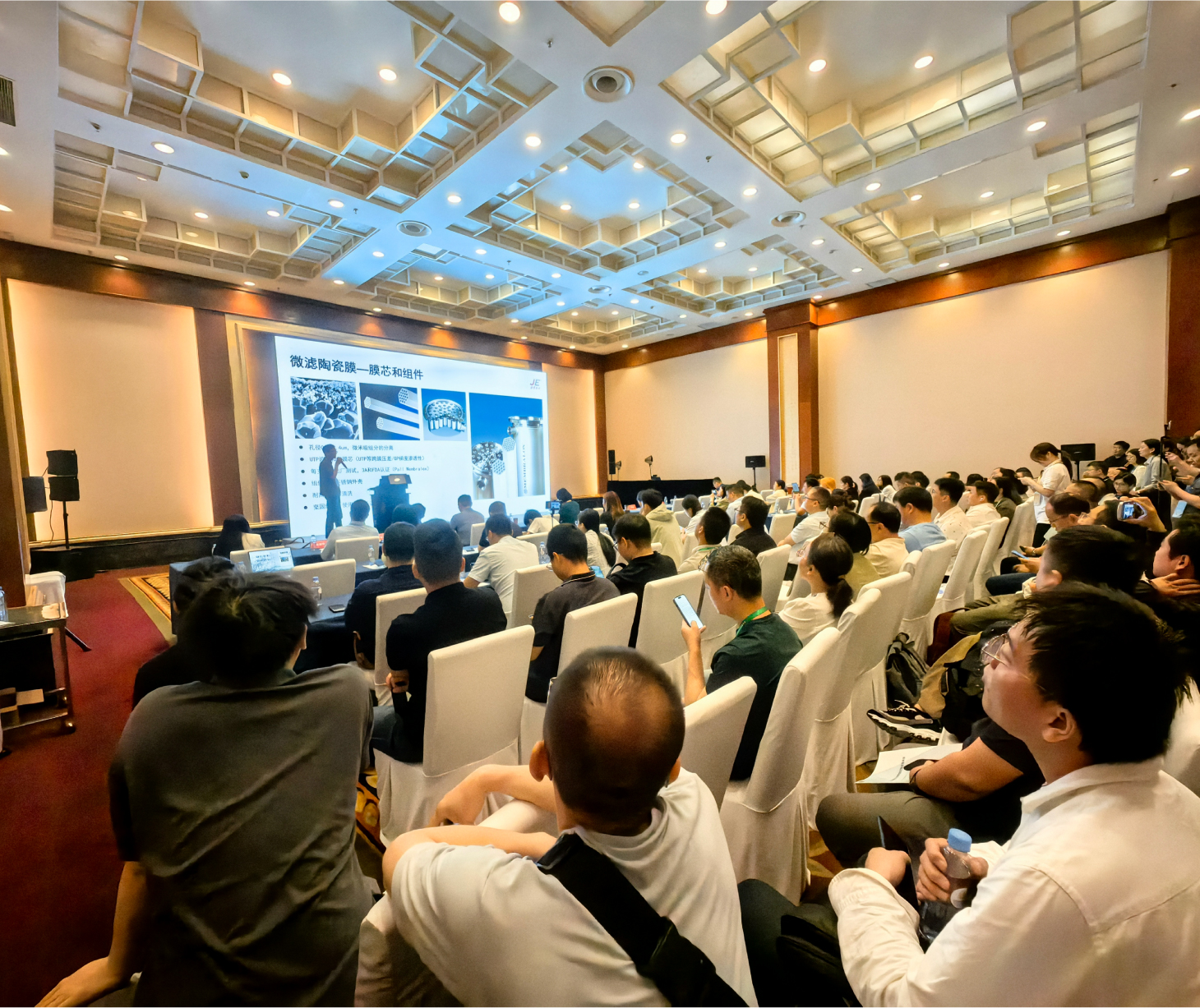
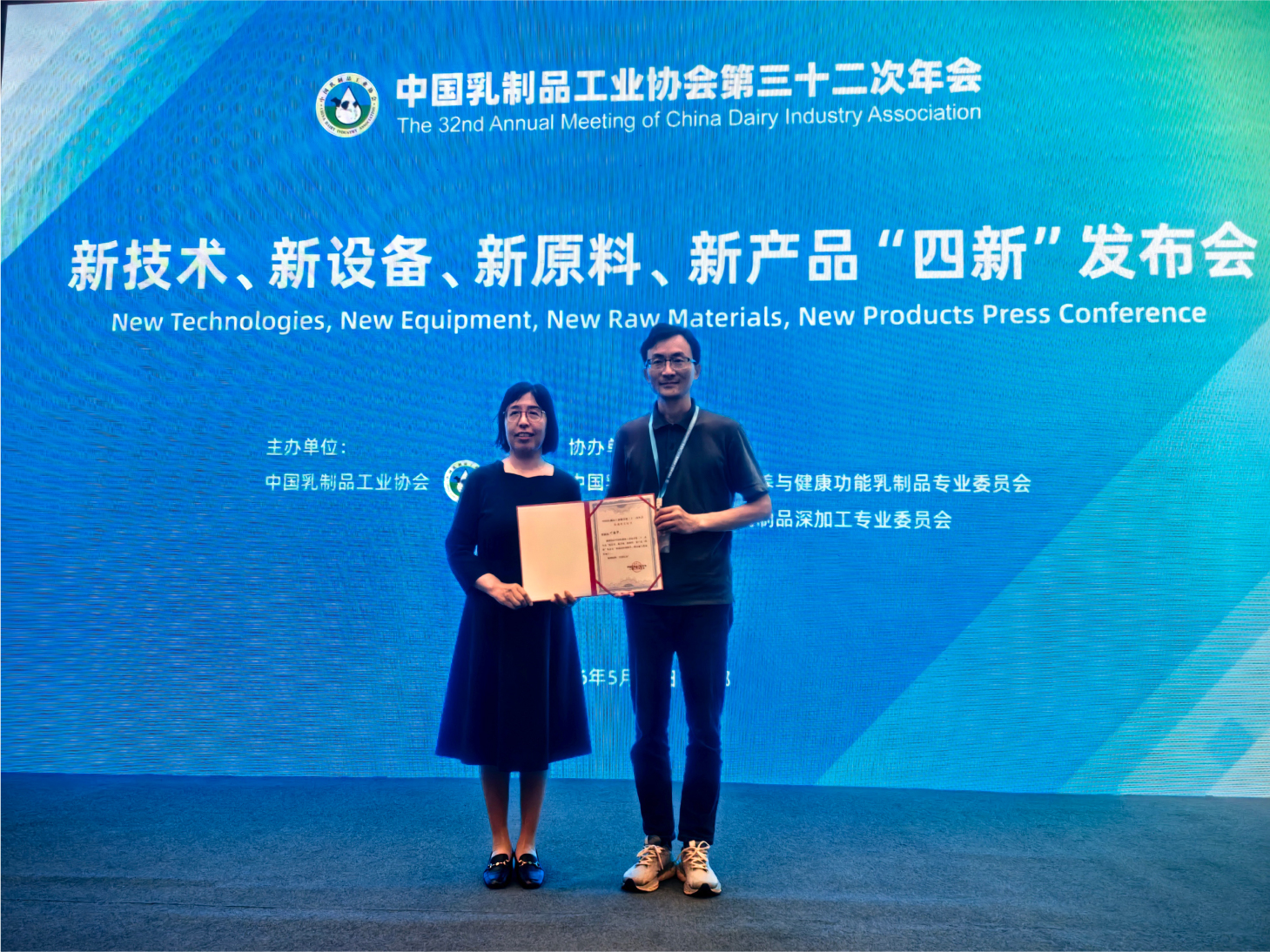
On the morning of May 28, Ye Junhua, Technical Director of Jieyi Fluid Technology (Shanghai) Co., Ltd. (hereinafter referred to as Jieyi Fluid), delivered a special presentation titled Membrane Filtration and Deep Processing of Dairy Products to industry peers at the New Products, New Technologies, New Equipment & New Materials Launch Forum, a dedicated session of the 32nd Annual Conference of China Dairy Industry Association and the 2026 China Dairy Technology Expo.
The presentation covered mainstream membrane filtration (membrane separation) technologies and core equipment available on the market, as well as major deep processing routes built around membrane filtration. Taking membrane filtration as a precision purification process, it highlighted three major breakthroughs achieved by domestically manufactured membrane filtration equipment.
Substantial progress has been achieved in the domestic manufacturing of nanofiltration systems, an eco-friendly non-thermal concentration technology for further purification and concentration of premium milk protein powders such as Milk Protein Concentrate (MPC) and Whey Protein Concentrate (WPC).
Nanofiltration-based concentration has been researched globally for many years. Key industry research data and conclusions are summarized as follows:
Milk proteins concentrated via nanofiltration score 92.8 out of 100 in comprehensive sensory evaluation covering color, texture, aroma and taste, outperforming the 83.5 score of evaporation-concentrated counterparts, with the retention rate of flavor compounds rising by nearly 30% [1].
In terms of nutrient retention, nanofiltration retains far more vitamin C than evaporation processes.
Nanofiltration effectively preserves calcium and magnesium ions while removing partial sodium and potassium ions [1][2][3].
From the perspective of processing performance as high-end milk powder raw materials, milk protein powders produced by nanofiltration exhibit superior protein structural properties in rehydration, solubility, emulsification and stability throughout shelf life [1][4].
Practical engineering cases of Jieyi serve as evidence: its nanofiltration systems can concentrate whey permeate with approximately 4% total solids to roughly 25% while removing 40%–48% of salts, delivering higher-grade products with drastically lower energy consumption compared with traditional evaporation.
Jieyi high-pressure nanofiltration systems are capable of concentrating raw milk and skim milk feedstock to 35%–40% total solids. A single unit can fully replace evaporators, acting as a pivotal alternative technology for greener, more efficient and higher-quality dairy manufacturing.
WPC80 has become an indispensable hot product amid China’s current dairy market landscape. Since 2025, the global market has suffered structural shortages of both WPC80 and WPI. Industry projections show that the global milk protein supply gap will hit at least 30,000 tons over the next five years — an amount equivalent to China’s total market demand. At present, domestically produced milk protein raw materials can satisfy less than 10% of domestic consumption, and this supply shortage ushers in massive development opportunities for local milk protein manufacturing.
Cheese production is tightly bound to whey protein output. Globally, the co-production of cheese and whey protein remains the primary route for manufacturing deep-processed milk proteins.
Faced with skyrocketing demand for milk proteins, how can dairy manufacturers quickly launch production lines while building highly flexible supply chains and balanced production portfolios to cope with long-term shifts in market supply and demand? Jieyi puts forward the following technical approaches:
This solution targets dairies already operating natural cheese and cheese curd lines that plan to expand into deep processing of whey feedstock. For milk protein production, a modular system is recommended to deliver highly agile manufacturing capacity long-term. Take Jieyi’s WPC 40 | 60 | 80 co-production solution as an example:
Splitting the primary ultrafiltration (UF) system into two independent units creates a far more flexible multi-grade WPC co-production workflow. When production runs below full capacity in early operation phases, equipment operating costs are cut; meanwhile, the multi-stage purification setup enables manufacturers to adapt to shifting market requirements.
Upon this foundation, an integrated nanofiltration plus reverse osmosis unit (NF+ROP) can be added to further treat lactose liquid. Around 70%–80% of process water is recovered and recycled to the CIP system for cleaning use, drastically alleviating the factory’s wastewater treatment load and supporting customers in developing zero-liquid-discharge green manufacturing facilities.
This membrane separation process produces native whey protein and native casein. Jieyi has developed an innovative large-scale membrane-based protein separation production route for customers who intend to produce whey protein without plans for natural cheese or cheese curd production.
Its core technical principle leverages the molecular weight difference between casein and whey protein to achieve fractional protein separation via high-precision membrane filtration. Verified by adequate tests, Jieyi’s MFF microfiltration system can directly extract most whey proteins from skim milk, yielding pure native whey protein liquid and native casein-enriched milk.
The whey protein liquid produced by this process boasts the highest quality among all available manufacturing technologies. Free from rennet coagulation, acid coagulation and other treatments, the premium-grade whey can not only be used for WPC production but also serves as an ideal feedstock for advanced WPI manufacturing.
What are the applicable solutions for its by-product, casein-enriched milk? In light of current market demands and innovative development trends, Jieyi offers the following six application approaches:
As a natural slow-release protein, casein can be processed into neutral dairy drinks or fermented foods requiring sustained nutrient absorption, such as slow-release sports protein supplements.
It can be used as a raw material to adjust the casein-to-whey protein ratio for sales as cheese-making milk, or partially replace protein feedstocks in cheese processing including rennet casein and sodium caseinate.
It acts as the raw material for micellar casein production.
It can be used alone or blended with skim milk at a specific ratio to produce modified MPC.
It can be directly spray-dried to manufacture cheese powder.
It can undergo enzymatic hydrolysis to produce casein hydrolysate peptides, a high-end functional bioactive dairy-derived ingredient. Public data shows that casein peptides deliver prominent effects on stress regulation and sleep quality improvement. Relevant efficacy certifications for stress relief and sleep optimization have been granted in Australia and South Korea, while in China, casein peptides are regulated as general food raw materials.
In terms of equipment supply, Jieyi has mature manufacturing capacity for MFF systems with a processing capacity of 30 tons per hour for casein and whey protein separation, providing reliable hardware support for the rapid implementation and large-scale commercial production of such solutions.
Whole Milk Protein Concentration and Lactose-Free Solution
This refers to the membrane-based high-protein, lactose-free solution. Beyond the planning for combined production of natural cheese and whey, as well as the separation and enrichment of casein and whey protein, Jieyi Fluid presents a third milk protein solution: Lactose Free Milk Protein Concentrate (Lactose Free MPC).
Through an integrated system of ultrafiltration and nanofiltration, Jieyi Fluid can enrich the protein content in milk to a range of 4.0%–16.0% solely through membrane filtration processes, without any enzymatic hydrolysis, while reducing lactose content to between 0.15% and 0.5%. This is truly zero-additive, lactose-free milk (the national standard for lactose-free claims requires lactose content ≤ 0.5g/100g for solids or ≤ 0.5g/100mL for liquids).
The innovation of this process lies in the use of only low-temperature physical separation, without any phase change or the use of traditional lactase, to obtain protein-fortified milk that is both lactose-free and zero in total sugar. Compared with enzymatic hydrolysis processes, it effectively reduces total sugar and sweetness, providing new ideas for high-end milk-based nutritional foods, special medical and dietary foods, and sports nutrition. It has already been applied in related products of Shengyuan Laojuntang.
Part Three: Membrane Process Solution for High-Protein Yogurt
Towards the end of 2024, a type of "dry-choked yogurt" marketed with playful catchphrases like "chokes you into a swan neck" and "one bite chokes you for miles" began gaining traction through its fun meme culture and healthy positioning of "high protein, low calories." By 2025, it had fully broken into the mainstream. This wave of yogurt centered around the "high-protein" health claim appears to be one of the most dynamic and imaginative growth opportunities in the Chinese market, arriving just as Greek yogurt transitions from a "niche trend" to "one of the mainstream choices" on the cusp of an explosion.
From a technical perspective, for this type of yogurt marketed on selling points of "high protein," "low sugar," and "thick texture," is there a way to create new growth space with more reasonable initial investment? Compared with traditional separation solutions, Jieyi Fluid offers an innovative solution better suited for the growth of "high-protein yogurt" in China.
Pre-Concentration, Post-Fermentation
By adopting Jieyi's ultrafiltration system as the pre-concentration module, paired with conventional fermentation tanks and quark high-cone fermentation tanks, it is possible to produce high-protein yogurt with protein content as high as 12%.
The greatest value of the pre-concentration ultrafiltration module lies in its independent modularity and multi-functionality:
Achieves protein targets at different concentration levels—one machine unlocks countless formulation possibilities;
Can simultaneously be used for producing high-protein milk;
Can simultaneously be used for producing reduced-lactose milk.
In terms of production line layout, the pre-concentration ultrafiltration module can be integrated into fermentation lines, pasteurization lines, ESL (Extended Shelf Life) lines, or UHT (Ultra-High Temperature) lines for the production of high-protein yogurt, cheese milk, low-temperature/ambient high-protein milk, or rich milk—truly realizing one machine for multiple uses! In the current transition period shifting from scale growth to value growth, this can greatly expand the flexibility and resilience of the supply chain.
Pre-Fermentation, Post-Concentration
The core equipment of the post-concentration process is Jieyi's Super Ultrafiltration System—JE SUPER UF (combining spiral wound membrane and flat sheet membrane technologies), designed primarily for the separation and concentration of fermented products with higher solids content and higher viscosity. Compared with separators based on mechanical separation principles, post-concentration membrane separation offers the following advantages:
More reasonable initial investment;
When paired with conventional fermentation tanks, it can handle a broader range of protein levels, approximately 6–14%;
Whey protein remains in the product; small-molecule proteins deliver a more delicate mouthfeel, while also achieving higher product yield and greater nutritional value;
Acid whey contains almost no protein components, resulting in less waste and lower wastewater treatment burden;
Fat can directly participate in fermentation, imparting richer flavor to the product;
The natural smoothing effect from membrane pores produces a softer and more delicate texture, better suited to Chinese consumer preferences for a "dry and thick yet not harsh" mouthfeel.
Conclusion
More and more new dairy stories are unfolding in China. "Eating less, but eating better" reflects the evolving dietary behaviors, food intake patterns, and health expectations we are increasingly witnessing. "Less and better" means higher nutritional density, precision manufacturing, and functional orientation.
Along with the increasingly prominent trends of "low-temperature" and "deep processing" in China, advances in membrane filtration (membrane separation)—a typical representative of "non-thermal technology"—have demonstrated considerable potential for innovative processes to transform dairy production methods, making it an indispensable strategic technology for deep dairy processing.
The dairy industry, which has always centered its value proposition on protein and its narrative on health, is also undergoing a critical period of category structure development and consumption reshaping. We are increasingly aware that safety and autonomy at the raw material end have become a new proposition of our times.
Whey protein is but a microcosm. Through it, we see a new stage of development shifting from terminal brand competition to whole industry chain competition. As the number one brand in China by national sales volume of membrane filtration equipment for dairy processing[5], Jieyi Fluid will continue to deliver service solutions driven by innovation, efficiency, and value growth, providing clients with new ideas for flexible supply chain construction, reducing investment waste, and working together with the market to build long-term growth momentum better suited to China's "dairy landscape"!
信息来源:
[1] Cao, Jialu | Wang, Geng | Wu, Shaozong | Zhang, Wei | Liu, Chang | Li, Haimei | Li, Yan | Zhang, Liebing, Comparison of nanofiltration and evaporation technologies on the storage stability of milk protein concentrates[J] Dairy science & technology, 2016, Volume 96 Issue 1 Pagination 107 - 121 ISSN 1958-5586
[2] M. F. Sayel, Nahla Tariq Khalid, Khalid Turki Rashid, Comparative Study of Nanofiltration and Evaporation Technologies on the Milk Concentration [J]. Earth and Environmental Science, 2023 , № 11, p. 112022
https://www.nalvmo.cn/xwzx/gsxw/951.html
[3] http://paper.cfsn.cn/content/2025-01/23/content_170999.htm
[4] Wang, Hong | Wang, Yunna | Cao, Jialu | Yuan, Dongdong | Chen, Liankun | Han, Jie | Li, Yan | Zhang, Liebing, Short communication: Effects of nanofiltration and evaporation on the gel properties of milk protein concentrates with different preheat treatments 【J】 Journal of dairy science,2018, Volume 101 Issue 6 Pagination 4977 - 4982 ISSN 0022-0302
[5] Data source: Shangpu Consulting Group. Through market research comparing the omni-channel market performance of dairy processing membrane filtration equipment across enterprises nationwide (excluding Hong Kong, Macao, and Taiwan), it is concluded that Jieyi ranks first in national sales volume of dairy processing membrane filtration equipment. Dairy processing membrane filtration equipment refers to specialized sanitary fluid processing equipment based on membrane separation technology, used for physical sterilization, separation, concentration, or component adjustment of milk or other dairy products.
Statistical period: January 1, 2025 to December 31, 2025; this statement was completed in April 2026.


 +86 13651600783
 Current location:

